7X24 service hotline:
Contact:Ashley lee
Phone:+86 18336073597
Tel:18336073597
Address:industrial park,Fengquan District, Xinxiang City, Henan Province,China
40FT Lpg ISO Tank Container
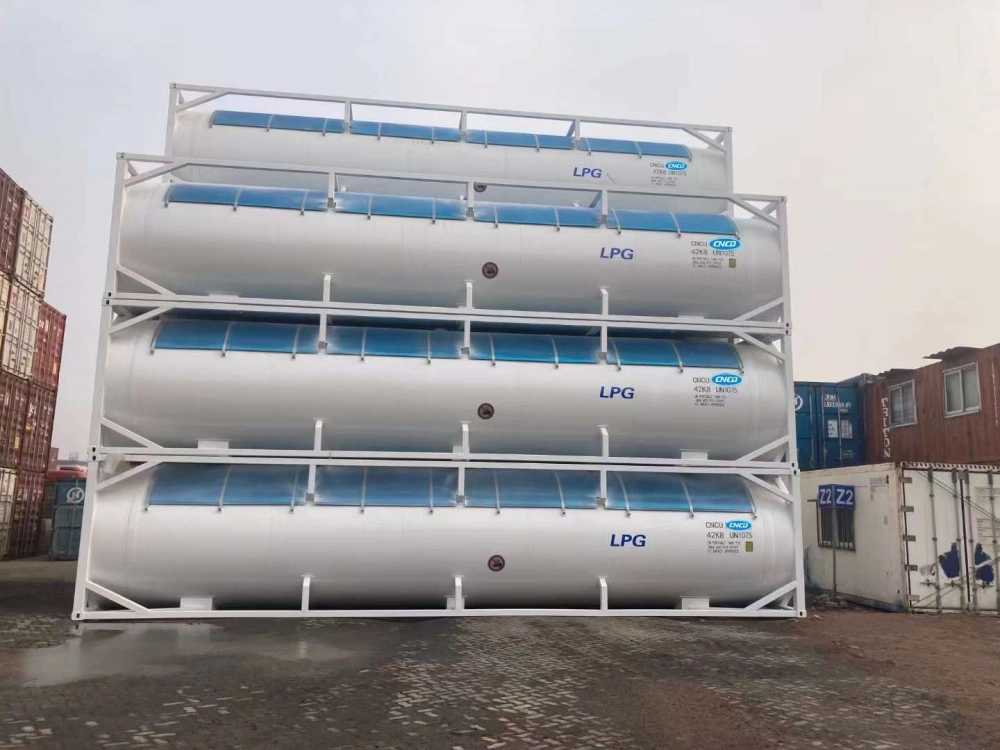 40FT LPG ISO tank container is a mobile pressure container specially designed for multimodal transport of liquefied petroleum gas by sea, rail and road.
Specification
| model | 20ft | 40ft |
| Dimension | 6058mm*2438mm*2591mm | 12192mm**2438mm*2591mm |
| Working medium | LPG | |
| Operating pressure (MPa) | 2.2 | 1.8 |
| Empty container weight (kg) | 8000 | 13000 |
| Maximum gross operating weight (kg) | 34000 | 36000 |
| Design temperature(℃) | -40/+50 | |
| Volume(m³) | 24.5 | 51.8 |
More Details
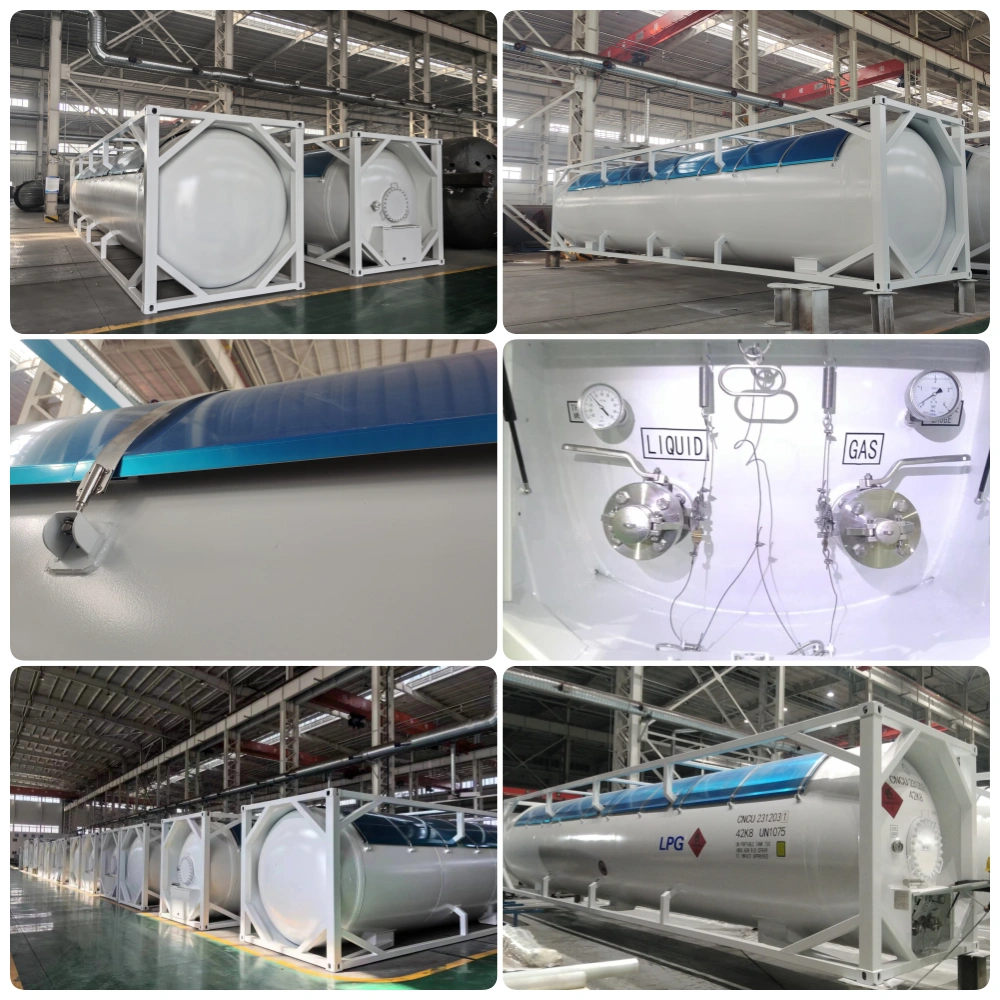 Packing & Delivery
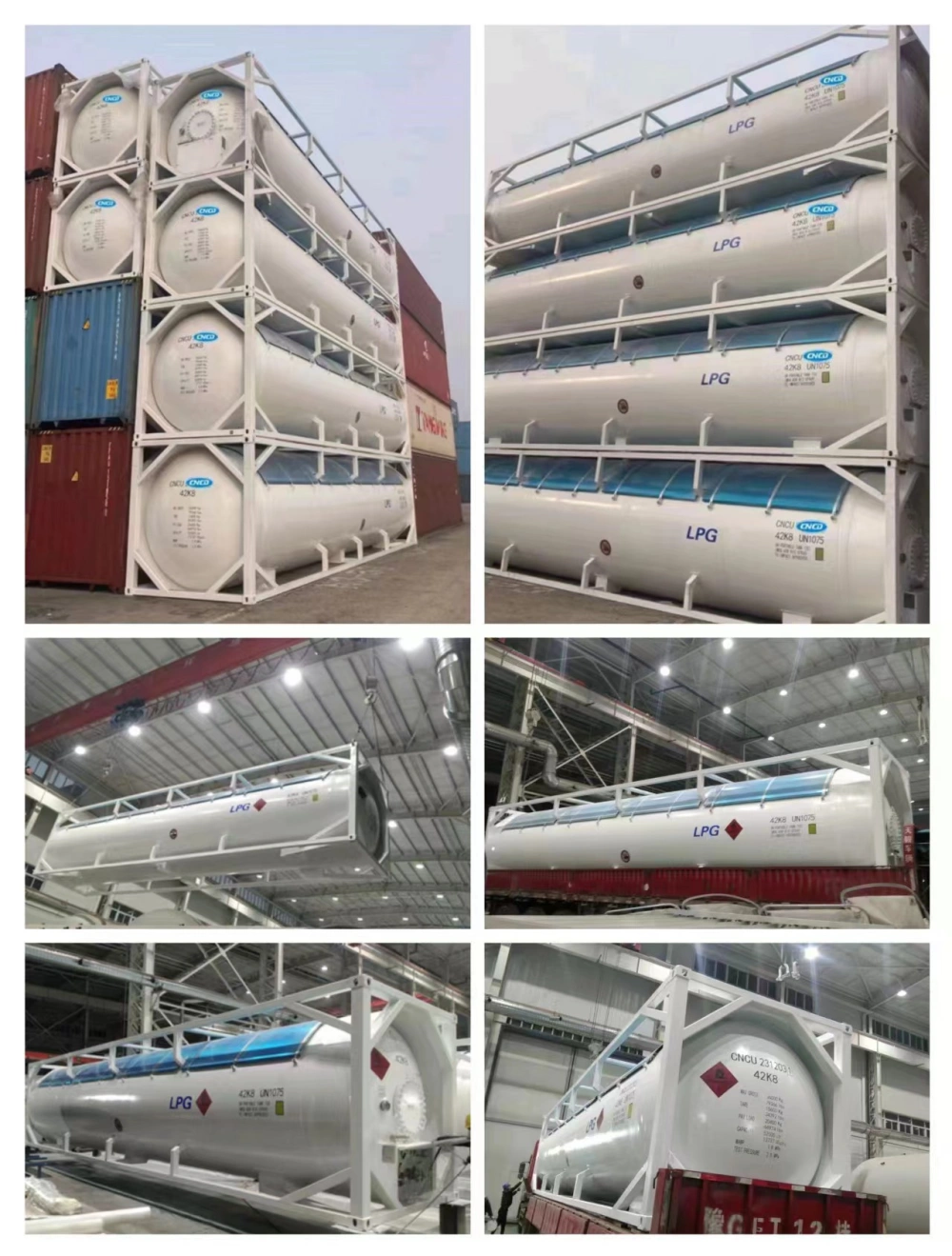 Transport Precautions
Transporting LPG tank containers is a high-risk operation and must strictly comply with relevant international and national regulations.
1. Qualifications and Documents:
The transport company, vehicle, driver, and escort must hold the appropriate dangerous goods transport qualifications.
Must carry on board the vehicle: a Dangerous Goods Declaration, dangerous goods transport documents compliant with IMDG/ADR regulations, the tank container’s statutory inspection certificates (such as the Design Approval Certificate, Container Safety Certificate, etc.), filling records, and an emergency rescue card (MSDS).
2. Tank Container Condition Inspection:
Safety Devices: Ensure all valves (emergency shut-off valve, gas/liquid valve, drain valve, etc.) are intact and in the correct position, that the safety valve is leaking, and that the seals are intact.
Pressure and Liquid Level: Confirm that the transport pressure is within the normal range and that the liquid level gauge indicates a fill rate of no more than 80%.
External Structure: Inspect the frame and corner fittings for obvious deformation or damage, and that the markings (dangerous goods placard, UN 1075 number, fire safety signs, etc.) are legible.
3. Vehicles and Equipment:
Use a dedicated trailer for transporting hazardous materials, equipped with spark arresters, static-discharging tape, and a fire extinguisher.
Ensure the tank container is securely locked to the vehicle frame.
4. Driving Requirements:
Drive along the designated route, avoiding densely populated areas and rush hour traffic as much as possible.
Drive smoothly, and avoid sudden braking or acceleration.
Maintain a safe speed; the speed limit on highways is generally below 80 km/h.
Stops must be supervised by a designated person and kept away from open flames, heat sources, and people.
5. Emergency Preparedness:
The driver and escort must be familiar with the hazardous nature of the cargo (flammable and explosive) and emergency response procedures.
Equip the vehicle with necessary personal protective equipment (PPE) and emergency equipment (such as leak plugging tools).
Contact:Ashley lee
Email:cncd@cryocontainer.com
Tel:18336073597
Address:industrial park,Fengquan District, Xinxiang City, Henan Province,China
Hotline
Use Whatsapp "Scan" to add friends for consultation