7X24 service hotline:
Contact:Ashley lee
Phone:+86 18336073597
Tel:18336073597
Address:industrial park,Fengquan District, Xinxiang City, Henan Province,China
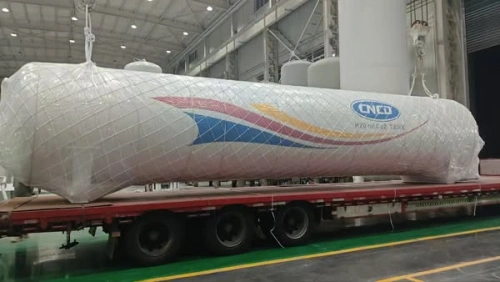
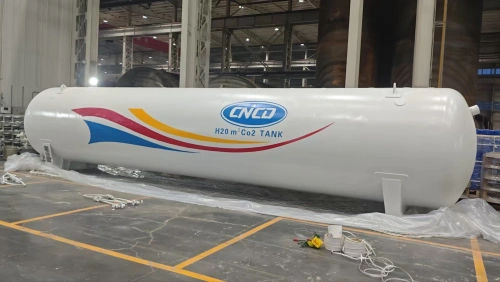
A 20m³ horizontal CO2 storage tank is about to be shipped to the port.
Recently, a meticulously manufactured 20m³ horizontal CO2 storage tank completed its final assembly and commissioning. It is now covered with a plastic tarp, secured with a net bag, and ready for shipment to the port. Horizontal CO2 storage tanks offer unique advantages over vertical tanks.
From a structural perspective, horizontal CO2 storage tanks are positioned horizontally, in stark contrast to the vertical placement of vertical tanks. This horizontal design provides greater stability. In locations subject to vibration or instability, such as near major traffic arteries and factory floors, horizontal tanks, with their low center of gravity, can reduce safety hazards caused by sway or displacement.
In terms of capacity and height, while horizontal CO2 storage tanks may not be the largest in large-scale projects compared to vertical tanks, they can effectively meet medium- and low-capacity requirements. For small factories, laboratories, or temporary storage sites, a 20m³ horizontal tank is a perfect size. It avoids wasting resources due to excessive capacity, nor requiring frequent equipment replacement due to undersizing. Furthermore, due to its relatively low height, it can easily adapt to height-restricted locations, such as low-ceiling warehouses and basements.
Pressure tolerance is a key performance metric for storage tanks, and horizontal tanks offer inherent advantages in this regard. Their structural design allows them to better withstand internal pressure, making them ideal for pressurized carbon dioxide storage. Under certain conditions, carbon dioxide requires pressure to maintain its physical stability. Through appropriate tank thickness design and rib placement, horizontal tanks effectively distribute internal pressure and ensure safe operation.
Ease of installation and maintenance is also a key advantage of horizontal carbon dioxide tanks. While horizontal tanks require more support during installation, their proximity to the ground makes them much easier to transport and position during installation, as well as to inspect and repair during subsequent maintenance. When performing maintenance on horizontal storage tanks, workers can easily access the interior using a ladder to inspect and repair components such as the tank walls, pipes, and valves, without the need for complex climbing equipment. Furthermore, horizontal tanks typically feature multiple inspection and cleaning ports, making daily cleaning and regular maintenance more efficient.
Horizontal CO2 storage tanks are commonly used for transportation, short-term storage, or applications requiring high pressure. Their horizontal structure makes them easier to secure to transport vehicles, reducing vibration during transportation. At construction sites and other outdoor operations requiring short-term CO2 storage, horizontal tanks can be flexibly positioned to adapt to the site’s shape and accommodate a variety of complex spatial environments. For example, in outdoor welding operations, where CO2 shielding gas is required at all times, horizontal tanks can be conveniently placed near the work area, providing a stable gas source. Vertical tanks, on the other hand, are often used in fixed locations with large capacity requirements, such as water treatment and chemical liquid storage.
Contact:Ashley lee
Email:cncd@cryocontainer.com
Tel:18336073597
Address:industrial park,Fengquan District, Xinxiang City, Henan Province,China
Hotline
Use Whatsapp "Scan" to add friends for consultation